Friday, November 27, 2015

Queen Marie of Romania - The New Theodora


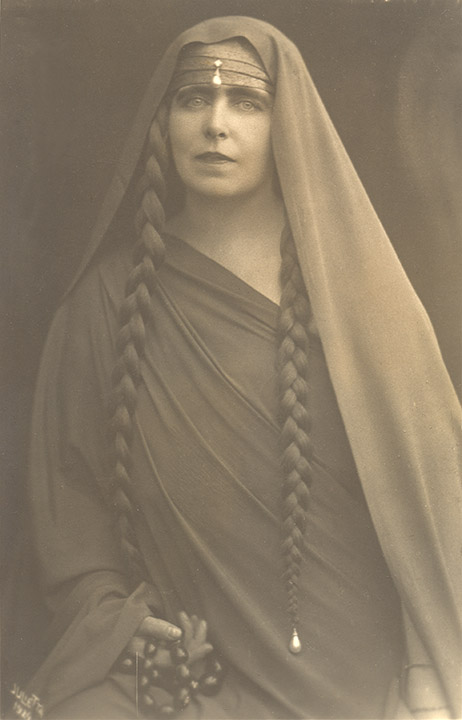
One of the most enigmatic people of the twentieth century was Marie Queen of Romania, one-time owner of Dracula castle, Bran Castle which was one of her favourite retreats. In all respects a reincarnation of the sprit of a Byzantine Queen, Marie cut a figure like no other since the days of Queen Theodora of Byzantium.

The Empress Theodora at the Colosseum, oil painting by Jean-Joseph Benjamin-Constant

Marie was one of the most colorful figures in European history, one of Queen Victoria of Englands five grandchildren and the person who refused George V of England's hand in marriage. Crown Princess between 1893 and 1914, she became immediately popular with the Romanian people. She was named Marie Alexandra Victoria, after her mother and grandmothers, but she was informally known as "Missy".   


As a grandchild of the reigning British monarch in the male line, Marie was formally styled "Her Royal Highness Princess Marie of Edinburgh" from birth. The Duke of Edinburgh wrote that his daughter "promises to be as fine a child as her brother and gives every evidence of finely developed lungs and did so before she was fairly in the world." Prior to 2009, many of Marie's personal belongings were on display at Bran Castle, her residence in her later years, which functions as a museum. That year, when the castle was legally restored to Princess Ileana's heirs, the Culture Ministry moved the collection of her items to a nearby building, Vama Medievală, which is also open to visitors.


The Maryhill Museum of Art holds a permanent exhibition titled "Marie, Queen of Romania"; this display includes the queen's coronation gown, a copy of the crown, silverware, gilt furniture and jewelry, among other items. Background in brief In Romania, Marie is known by the nickname "Mama Răniților" (Mother of the Wounded), or simply as "Regina Maria", while in other countries she is remembered as the "Soldier Queen" and "Mamma Regina". Even before her ascension as queen of Romania, Marie had succeeded in establishing her public image as that of "one of the best-looking and richest princesses in Europe". 


She was known primarily for her talent in horse-riding, writing, painting, sculpting, dancing and for her beauty.  Her popularity was dimmed by two slanderous campaigns: that conducted by the Central Powers during World War I; and that led by communist officials after Romania's transition to a Socialist Republic in 1947. 


During Romania's 42 years under communist rule, Marie was alternately depicted as either an "agent of English capitalism" or as a devoted patriot who believed that her destiny was intertwined with that of Romania. Marie's supposed extramarital affairs were brought forward as evidence of promiscuity, which contravened communist values. In 1968, communist officials vandalised the chapel sheltering Marie's heart, opening the sarcophagus and taking the boxes as well as the heart into Bran Castle. In 1971, these were transferred to Bucharest's National Museum of Romanian History. It was not until the late period of Nicolae Ceaușescu's regime, the last years before the Romanian Revolution, that Marie's merits came to be acknowledged. Queen Marie of Romania will be figured in The Elements, as will Bran Castle. 

 Links 
http://en.wikipedia.org/wiki/Marie_of_Romania
https://en.wikipedia.org/wiki/Theodora_(6th_century)

Thursday, November 19, 2015

Hidden Nazi Train Secret, Forgotten Underground World


The following article concerning a Nazi train secret from WWII has been researched in connection with the epic mystery thriller fiction series The Elements. If you like this article and want to notified of giveaways and the forthcoming series sign up for The Elements newsletter.
Disclaimer
The following has been researched and compiled from all available sources on the Net. Where sources are known, credits have been provided to the sources and copyright holders. None of the images in this article are by the author or does the article represent original research. However, as of publication date it is in the authors opinion that this article is the most comprehensive treatment of the subject currently available on the Net. Author Mark David. Version 19.11.15
***
It’s not everyday an underground complex on the size of the largest becomes part of a past linking ancient grand castles with the end games of a war gone mad, carnage, defeat on the doorstep, crimes committed, gold and loot to be hidden and perhaps even more yet to be revealed. Such was the discovery made on August 28, 2015 in Walbrzych, Poland.


Armoured Train Discovery

It
could be one of the great discoveries of the war. Some historians believe up to three trains laden with arms, art, gold and archives vanished in a 18 sq mile area near the present Czech border as the Red Army advanced in 1945. The strategic area includes Hitler’s command post at the grandiose Ksiaz Castle (formerly known as Fürstenstein) and Project Riese, a suspected secret weapons programme.
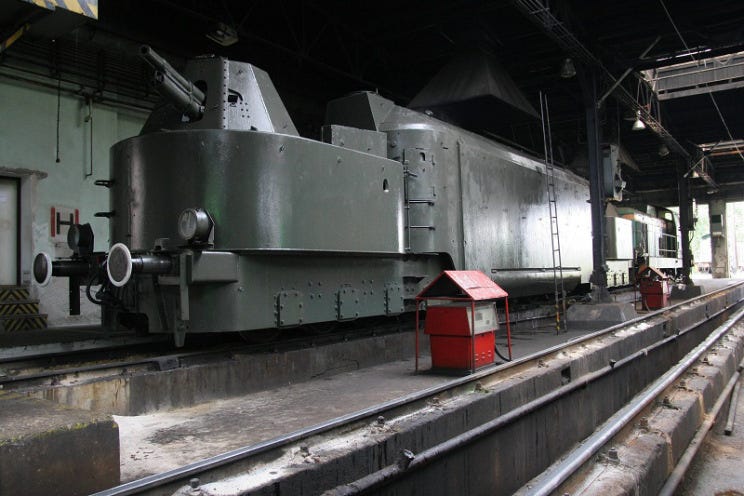
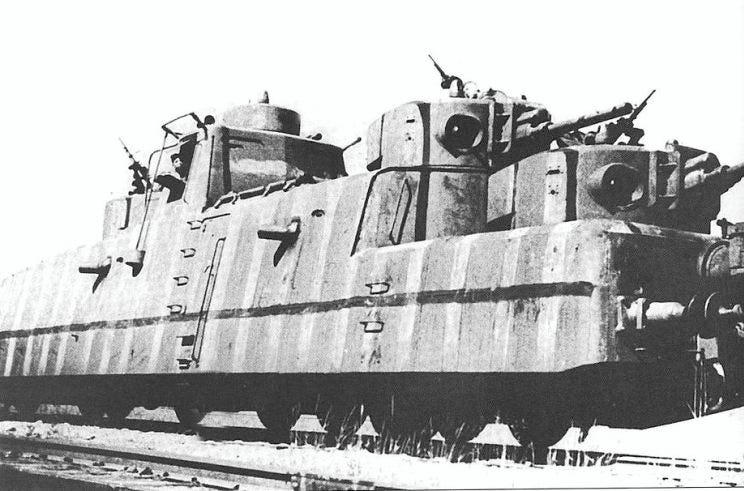
MBV-2 ARMOURED TRAIN, KRAKOW. FOTO TOMASZ WIECH / AGENCJA GAZETA

This has recently been confirmed with the news that a witness confessed the trains existence of at least one train as told by one of the men (treasure hunters Szpakowski, Koper and Richter) claiming they have found the train using radar scanning equipment. The witness is said to be one of those who helped hide the train in the tunnel complex called Riese, making a sketch of its location. Local media have broadcast images of digging equipment now at the site.
IMAGE COURTESY OF THE POLISH MINISTRY OF FOREIGN AFFAIRS

Background

Riese (German for ‘giant’) — is the name of the largest mining and construction project of the second world war conducted by the Nazis, located in the Owl Mountains (Góry Sowie, Poland) below the castle of Książ, built 1943–1945. The existence of a Nazi gold train, its whereabouts and its cargo — possibly stolen valuables and artworks — remained one of the great unsolved mysteries of the second world war. The tunnel complex hit the headlines in August 2015 as the treasure hunters claimed they had identified a legendary Nazi train packed with weapons, gold, money, and archives hidden in a long-forgotten tunnel in the Polish mountains.
A number of trains are believed to have been used by the Nazis in the 1940s to transport goods stolen from people in eastern Europe back to Berlin. While some might have made it to the German capital, others are believed to have been left behind as Soviet troops advanced in 1945.

Discovery Confirmed

The local Walbrzych District Council has said that it has received notification on the location of a “railway tunnel with a multi-level complex of underground corridors from the days of World War II.” The statement tallies with a report in the local Gazeta Wroclawska newspaper which claimed that a “great” tunnel had been found that could be longer than 2 kilometers. The newspaper also confirmed the tunnel had been found by the treasure hunters who had begun their effort to locate the train in August 2015, apparently aided not only by the sketch by the now deceased witness but also by a map drawn up in 1926.
© 2015 XYZ SPÓŁKA CYWILNA PIOTR KOPER & ANDREAS RICHTER

The Tunnel Complex called Riese

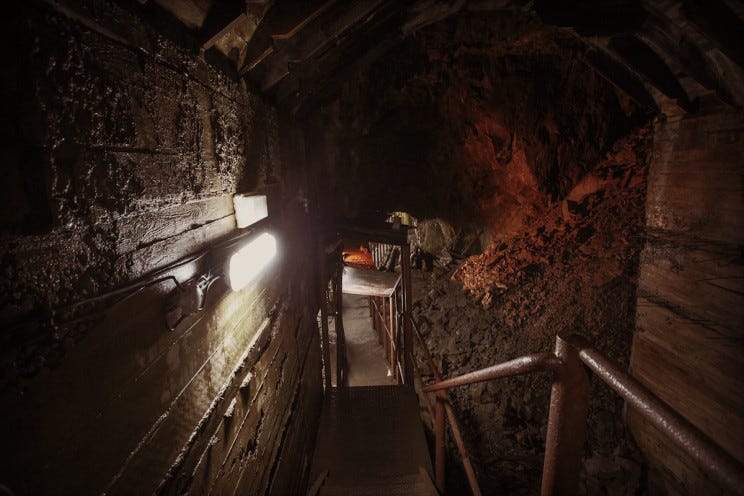
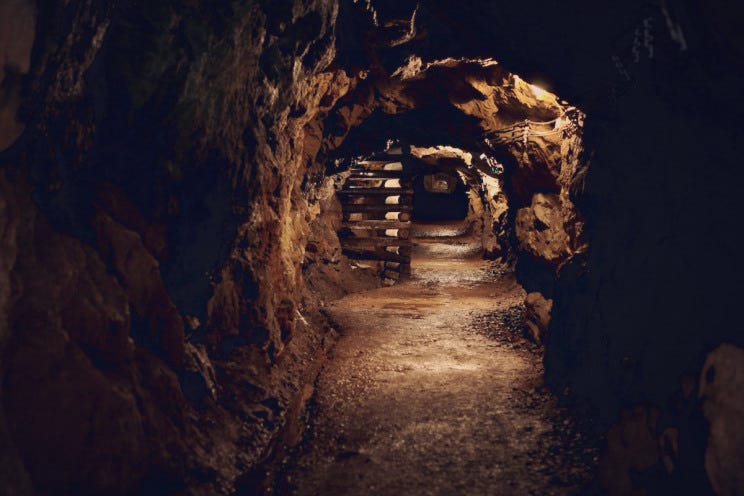
Riese means ‘giant’ in German, and this was where Hitler’s Wunderwaffe(magic weapons) were supposedly under development. It is unclear to what extent the underground mega city and arms factory actually functioned and how much of what we know is simply surviving propaganda. Some tunnels are flooded but in others are German machine guns and prisoner-of-war graffiti.
What we do know is that the finished concrete tunnels stretch almost 3,200 square meters. There are claims of a hidden laboratory where German scientist Hubertus Strughold conducted rocket research.
IMAGE COURTESY OF THE POLISH MINISTRY OF FOREIGN AFFAIRS

Already in 1942 the Ksiaz brought workers from Italy, followed by 400 miners of Donbass. Damages in 1943 by the Allied air forces to the German rocket research center on the island of Usedom, forced the Reich to relocate their Experimental Center to Ksiaz Castle. In 1944, there were over 3,000 forced laborers and prisoners working beneath the Castle. Huge quantities of building materials — reinforced concrete, steel, cement and sand were transported to the nearby town of Walbrzych.
IMAGE COURTESY OF THE POLISH MINISTRY OF FOREIGN AFFAIRS

Intensive works continued until 10 May, despite the fact that Hitler had already committed suicide, Festung Breslau capitulated, and the command of the German capitulation was signed the day before. According to documents from the Archives in Koblenz, Ksiaz Castle was to become a repository of documents from the SS and the Reich Security Main Office. The action was code-named Brabant Joseph I.
IMAGE COURTESY OF THE POLISH MINISTRY OF FOREIGN AFFAIRS

Details

The Polish Ministry has since confirmed the location of the train using ground-penetrating radar and engineers will begin surveying the site to determine how the armoured and possibly booby-trapped train can be retrieved. Poland’s Culture Ministry announced that the location of the Nazi train was revealed to Piotr Koper of Poland and Andreas Richter of Germany, through a deathbed confession. “On the death-bed, this person communicated the information together with a sketch, where this might possibly be.”
IMAGE COURTESY OF THE POLISH MINISTRY OF FOREIGN AFFAIRS

The treasure-hunters found the 100-meter-long armoured train using ground-penetrating radar equipment, confirming what they believe to be a train more than 100 meters (330 feet), since confirmed by the Polish Deputy Culture Minister Piotr Zuchowski quoted as saying “I am over 99 percent sure that such a train exists.” Koper and Richter immediately submitted a claim to the Polish government — under Polish law those who find treasure findings can keep 10 per cent of the value of their find.
IMAGE COURTESY OF THE POLISH MINISTRY OF FOREIGN AFFAIRS

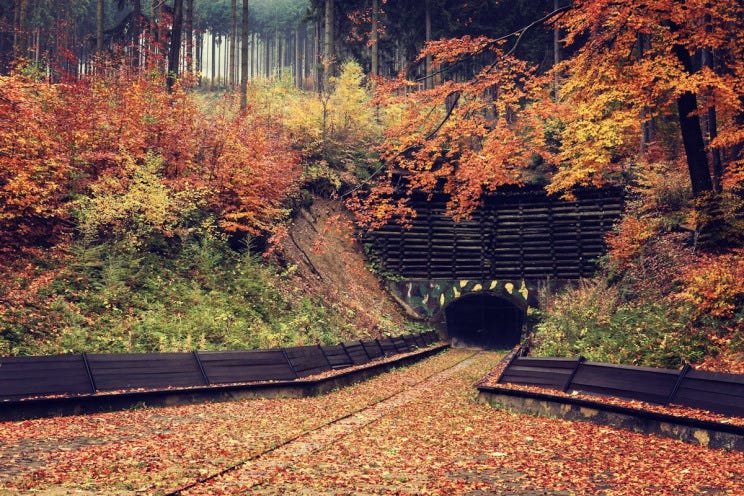
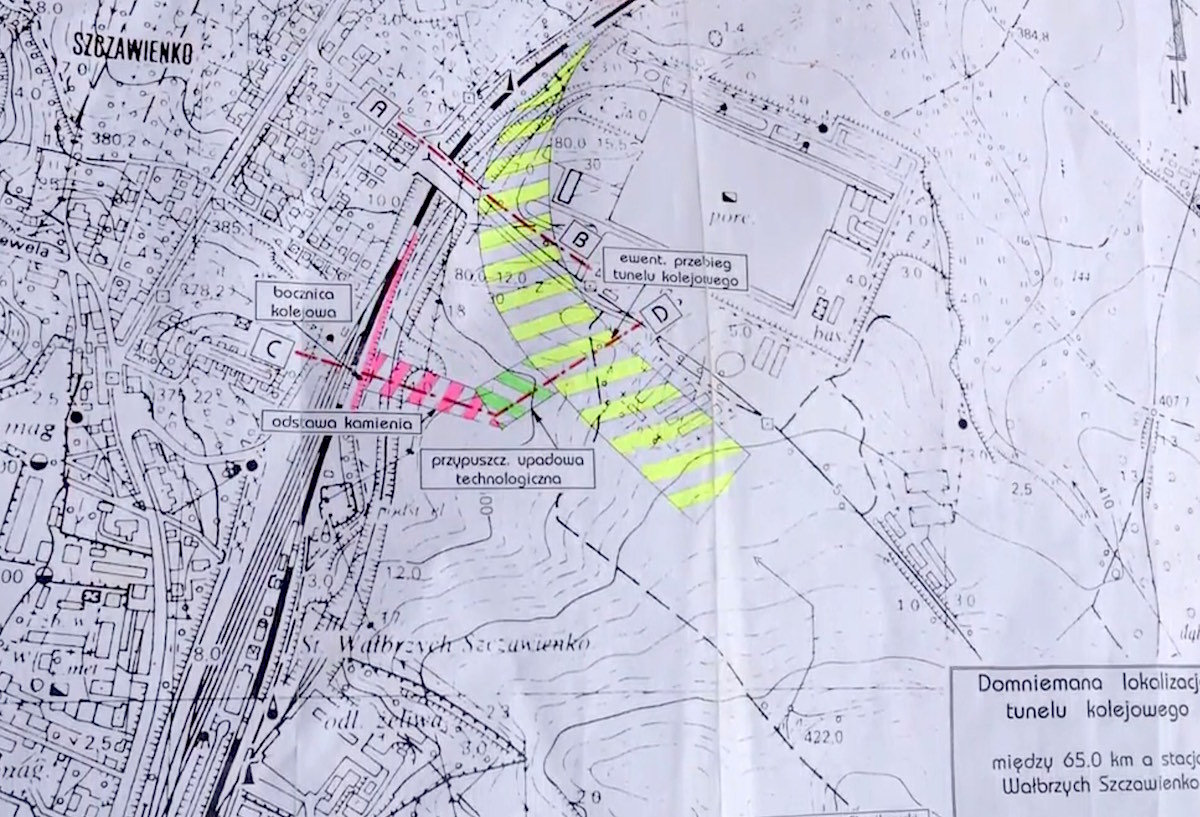
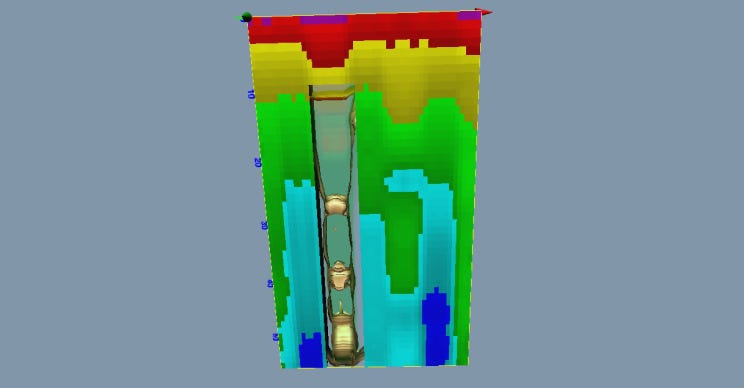
The radar image they released almost certainly shows a Nazi train located in an underground tunnel constructed by the Nazis along a 4km stretch of track branching off the Wroclaw-Walbryzch railway line. News is scarce however, as the authorities are keeping the exact location hidden, thought to be a sideline removed from the railway after the train had been driven into the underground tunnel complex to be buried for ever.
© 2015 XYZ SPÓŁKA CYWILNA PIOTR KOPER & ANDREAS RICHTER

The BBC’s Adam Easton in Warsaw says no documents have ever been discovered confirming the existence of the train even though local legend says a Nazi train filled with arms, art, gold and archives went missing near the city in 1945. No risks are being taken as the train could also be rigged with explosives requiring investigation through a carefully coordinated operation between the Polish Army, Police and Fire Brigade.

The Train

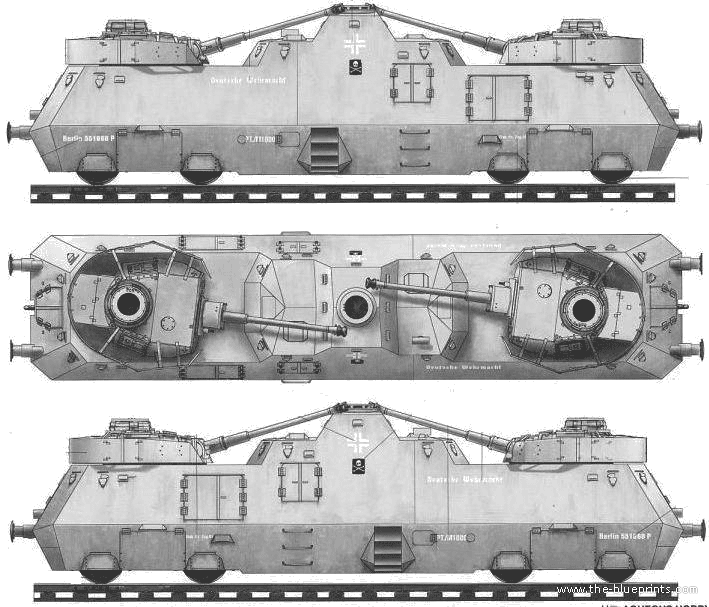
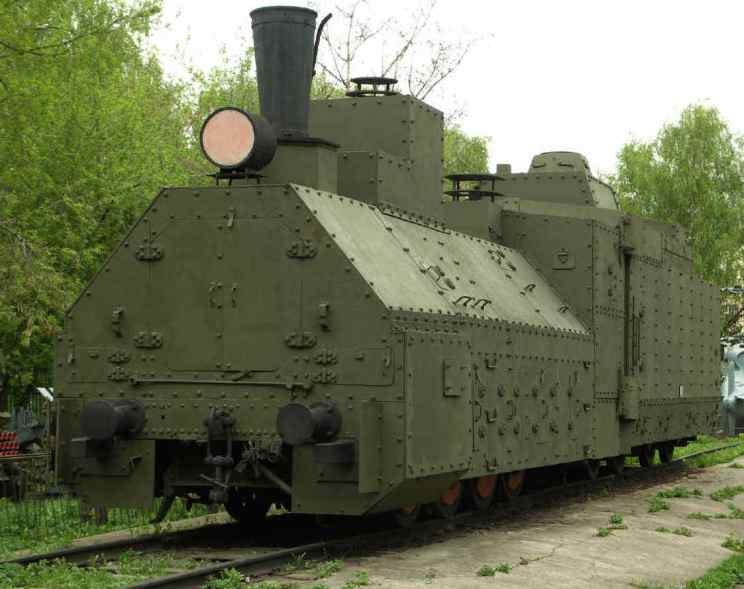
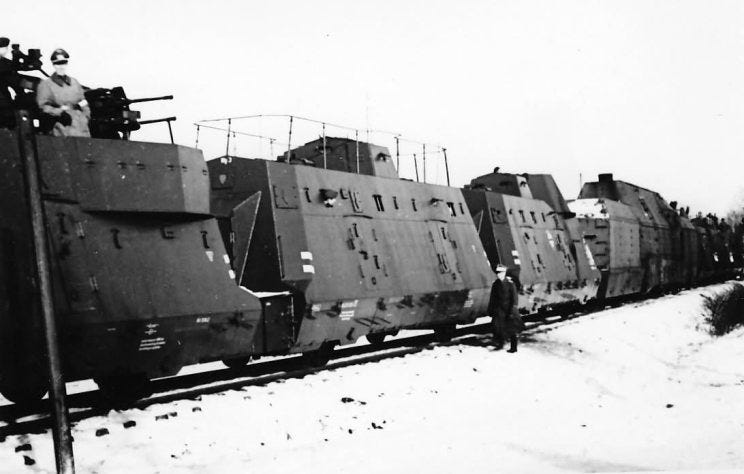
The train is probably one of the versatile and well-equipped armoured panserzug (youtube) trains produced by Nazis with heavy steel plating and armament, including rail cars which housed anti-aircraft guns and gun turrets, or designed to load and unload tanks and rail cars which had complete armour protection with a large concealed gun/howitzer. Germany also had fully armoured locomotives which could possible remain with the rest of the train underground.

It is believed three trains vanished in a 18 sq mile area near the present Czech border as the Red Army advanced in 1945, into the Project Riese network of underground tunnels and chambers dug out beneath the Owl Mountains by an estimated 30,000 prisoners of war and concentration camp prisoners.

“Four years ago, we were given information by a witness who was in Walbrzych at the time the train disappeared in April 1945. Radar technology has become affordable so we were able to check the information,” said Koper, who would not reveal if he knew anything about the hiding places of the other two supposed trains. “The Nazis dug out the embankment, created a junction and laid track to divert the train off to the side. Then they parked the train, which is 90 metres long, removed the rails and put back the soil.”

Since August, the Polish military has cleared vegetation from an area the size of a football pitch. Soldiers have swept for mines and analysed the ground for the presence of poison gas. During the holocaust, Zyklon B — for use in gas chambers — is believed to have been transported on the line. The treasure hunters’ images show only the outline of what appears to be a train. “We do not know what is inside, only that it is armoured, which suggests a precious cargo,” said Koper.
IMAGE COURTESY OF THE POLISH MINISTRY OF FOREIGN AFFAIRS

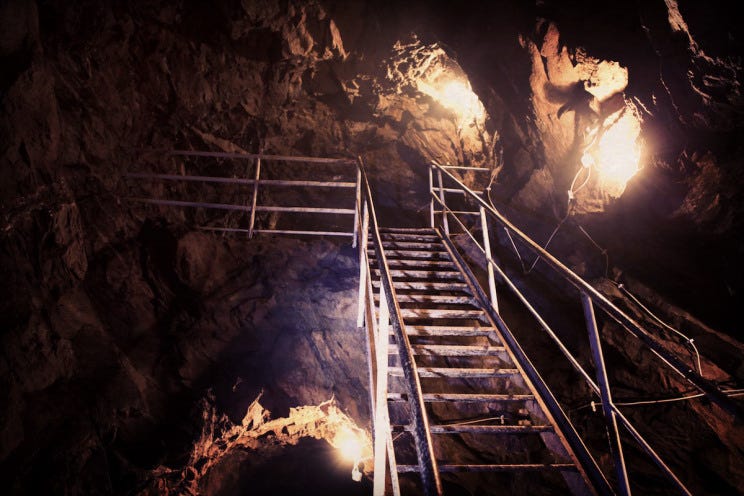
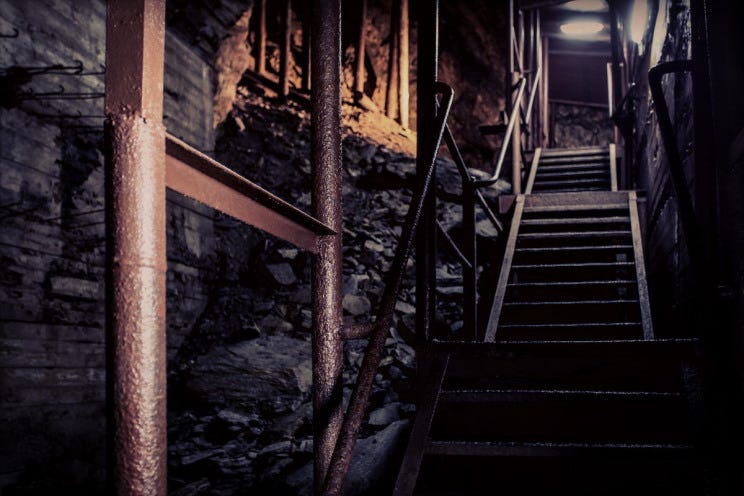
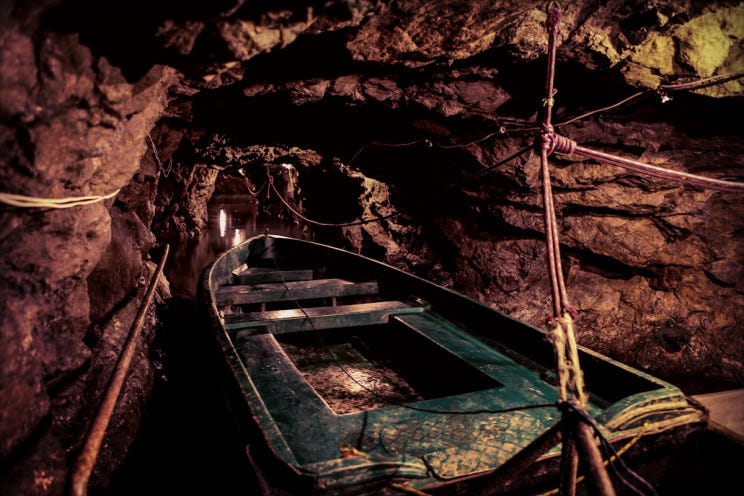
As of yet, no one knows of the condition of the tunnels, some of which are flooded in the lower levels requiring exploration by boat. Of the others, the myriad of levels, stairs and unfinished excavations make the site at Ksiaz probably the most captivating of the entire second world war.

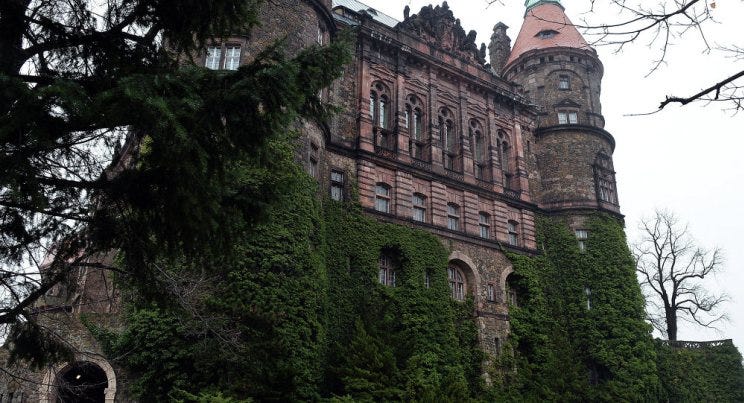
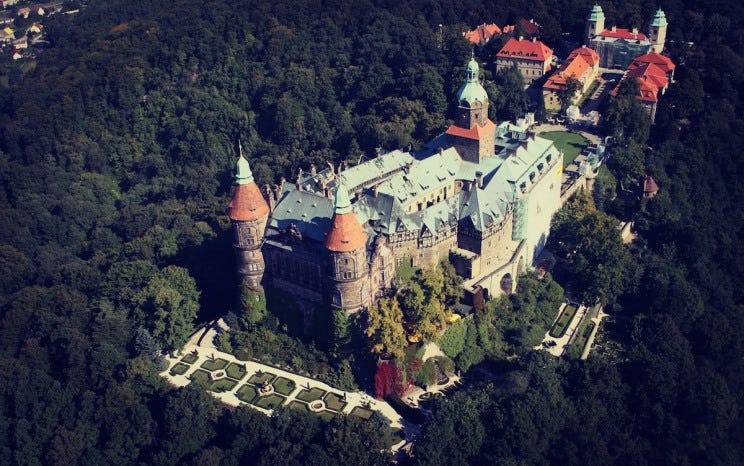
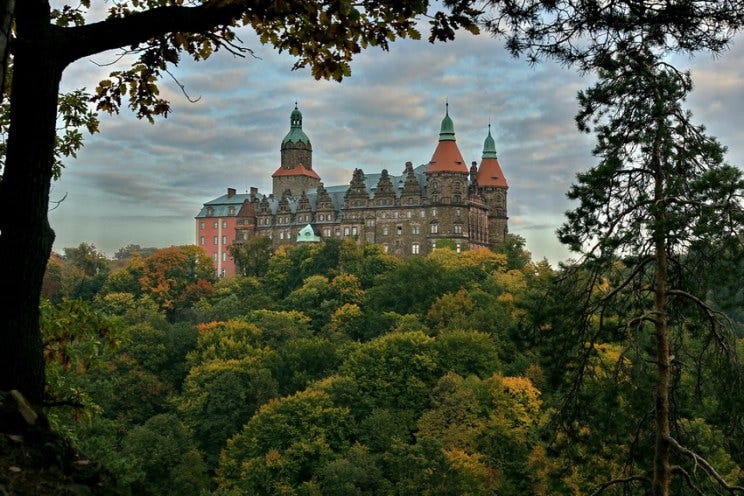
Ksiaz Castle near the Polish Czech border is one of the biggest castles in Europe. It’s the third biggest castle in Poland and the biggest one in South Silesia — the perfect setting for a wartime complex outdoing anything even Hollywood could have come up with. Built on a hilltop location with 360 degree views in all directions, Ksiaz was to be Hitler’s new fortress, the last bastion of Nazidom as the German forces battled it out against impossible on the Eastern Front.

History


The “Pearl of Silesia” was built between 1288–1292 under Bolko I the Strict situated on a high rocky tip on a bend of Pełcznica River, and for centuries belonged to the powerful Hochberg family. After numerous modifications and reconstructions it has now over 400 rooms and is an unusual mix of different styles. For centuries belonged to the powerful family of Hochberg. During this time the castle was visited by the most prosperous people in the world: prince couples, magnates, throne successors, but also John Quincy Adams, the future president of the United States and Tsar Nicholas I.
The family descended from the lineage of Hochberg residing the castle and employing nine thousands of persons fell into debt thus prince was forced to make the castle accessible for tourists — already then mansion was annually visited by over 80 thousand persons.
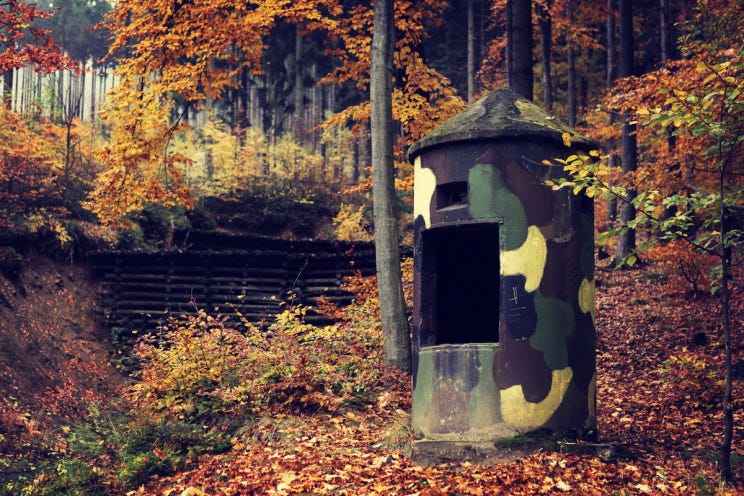
In 1939, because of the debts, Ksiaz with the entire surrounding area was took over by the treasury. Then, in 1941, the castle was confiscated by Nazi authorities. The paramilitary organization group Todt took over the castle in order to convert it into Hitler’s headquarters. Rooms located in the basement of the castle were built by the Nazis after the war and have never been opened. Beneath the castle, Germans dug huge tunnels (using the Gross Rosen concentration camp prisoners), in which trucks could freely move.

The castle’s last owner, evicted by the Nazis, was Wales-born Mary Theresa Olivia Cornwallis-West, first wife of Prince Hans Heinrich XV. Bearing the title of the Princess of Pless, but popularly known as Daisy, she was a great beauty, a socialite, and related by marriage to Winston Churchill. Her brother George was the second husband of Churchill’s mother, Jennie. The princess died in 1943 and was buried in the Hochberg Mausoleum near the castle, but her servants moved the body a number of times to protect the grave from plunder by Soviet troops, who occupied the area from May 1945 until the end of 1946.
Princess Daisy’s resting place remains unknown to this day.
***
Events similar to those portrayed are being developed for an epic fiction series The Elements. If you liked this article and want to notified of giveaways and the forthcoming epic fiction series sign up for The Elements newsletter.
Thanks for reading. Mark David

Originally published at mark-david.com on November 19, 2015.

Tuesday, September 1, 2015

MI6 agent found dead


By Mark David (mark-david.com)

MI6 denies cover-up of agent found dead


August 2010


When constructing fiction, especially fiction with a spy angle to it, research takes the author in all sorts of directions that only the internet can make possible. I was recently researching the secret stories of Britain's intelligence services and chanced upon this story I vaguely recall from 2010. It's an interesting story. The following is taken from various sources:

Britain's MI6 foreign intelligence service had denied that the mysterious death of one of its agents or that it had anything to do with his work - or that it had covered up the incident.


Police visited Gareth Williams's home during the afternoon of Monday 23 August 2010, as a "welfare check" after colleagues noted he had been out of contact for several days. His decomposing naked remains were found in a red North Face bag, padlocked from the outside, in the bath of the main bedroom's en-suite bathroom. His family believe that crucial DNA was interfered with and that fingerprints left at the scene were wiped off as part of a cover-up.


Vincent Williams from the Metropolitan Police informed the Westminster Coroner's Court that experts were agreed that it was impossible for Gareth Williams to have locked himself in. Williams's date of death was estimated to have been in the early hours of 16 August, one week before he was found.


A lawyer for his family said it was their belief that "a member of some agency specialising in the dark arts of the secret services" was involved in removing evidence related to his death.
An MI6 employee known only as "F" said there was no evidence to suggest the agency was involved in a cover-up of Williams' death or that his death was work-related. Nor, she added, was there any evidence that Williams' identity as an MI6 officer had been discovered by any foreign agencies.
Williams, a mathematics prodigy on a three-year secondment from the British Government Communications Headquarters (GCHQ) in western England, did technical work for MI6. His role was to "think up and design technology that could be used by others" in his four-person team, said "F".


He had successfully completed a training course for conducting operations within Britain, but was still involved in relatively low-risk activities, she added.Witness "F" said she understood that the delay in finding Williams' body had made it more difficult for his family to come to terms with his death.
As far as she knew, there had been no disciplinary action taken against anyone responsible for the delay in the discovery of the body, she said.
Williams' death has puzzled investigators, who have struggled to understand how he ended up in the bag, which also contained keys that would have unlocked its padlock. There were no signs of a struggle.
Jackie Sebire, a detective on Williams' case, testified she believed someone had helped him get into the bag. Specks of unknown DNA were found on it. Inside the flat, police also found women's clothing and make-up. Witness "F" said Williams' job did not require him to dress in women's clothing.

Williams's Work background

Williams had recently qualified for operational deployment, and had worked with US National Security Agency and FBI agents. The US State Department asked that no details of Williams's work should emerge at the inquest. The Foreign Secretary, William Hague, signed a Public-interest immunity certificate authorising the withholding from the inquest of details of Williams's work and US joint operations.


The journalist Duncan Campbell reported that the inquest evidence indicated Williams was one of a team of intelligence officers sent to penetrate US and UK hacking networks. He had attended the 2010 Black Hat Briefings and DEF CON conferences. He had started with SIS in London in spring 2009, and after taking a number of training courses started on "active operational work". A few months before his death, he asked to return to GCHQ as he disliked the "rat race, flash car competitions and post-work drinking culture" at SIS and as a keen cyclist and walker wanted to go back to the countryside, and was due to return in September.


The coroner was highly critical of the Metropolitan Police's Counter Terrorism Command (SO15), who failed to tell the senior investigating officer before the inquest began of the existence of nine memory sticks and other property in Williams's SIS office. SO15 failed to take formal statements when interviewing SIS officers. The coroner said the possible involvement of SIS staff in the death was a legitimate line of inquiry for the police.


Links:
http://en.wikipedia.org/wiki/Death_of_Gareth_Williams

Friday, August 21, 2015

Grand Hotel Heliopolis Palace, Cairo

By Mark David (mark-david.com)
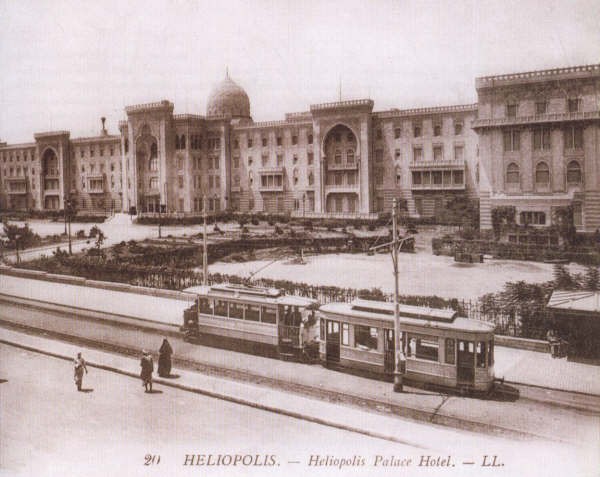
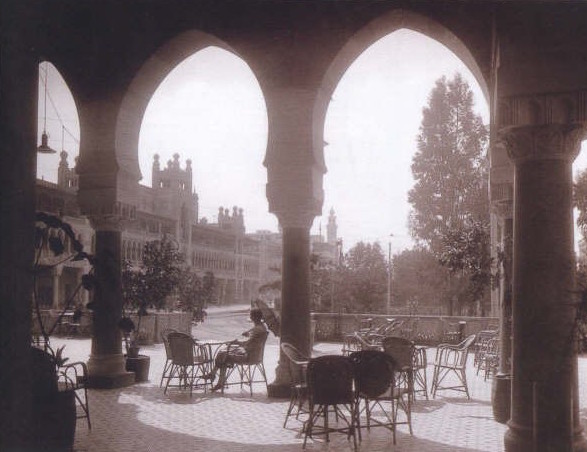
The grand Heliopolis Palace Hotel was built in 1910, refuted to be the most luxurious hotel of the time in Africa and the Middle East. With its architectural emminence the Heliopolis Palace Hotel became a travel destination for many, including foreign royals and international business tycoons. The hotel was designed by Belgian architect Ernest Jaspar, using the services of architect Alexandre Marcel to design the central dome using the local Heliopolis style of architecture, a synthesis of Persian, Moorish Revival, Islamic, and European Neoclassical architecture that became known as the Heliopolis style.
Heliopolis_Palace_Hotel_5_(2)
In its time, the luxurious Heliopolis Palace Hotel exceeded in service and elegance such great Cairo hotels as Shephard's (no longer existing) and the Continental (existing but not operational) both overlooking the Azbakia gardens and Opera square, as well as Mena House Hotel at the foot of the pyramids and the Semiramis Hotel (non-existent but replaced by a new tower and management). 

But none of those hotels was labelled “palace” like the Heliopolis Palace Hotel. And while all had celebrities of all sorts and heads of states reside in them, the Heliopolis Palace Hotel was the only one that changed functions during World Wars. 

The hotel was built by the contracting firms Leon Rolin & Co. and Padova, Dentamaro & Ferro, the two largest civil contractors in Egypt then. Siemens & Schuepert of Berlin fitted the hotel’s web of electric cables and installations. The utilities were to the most modern standards of their day. The hotel operations were under French administered management.
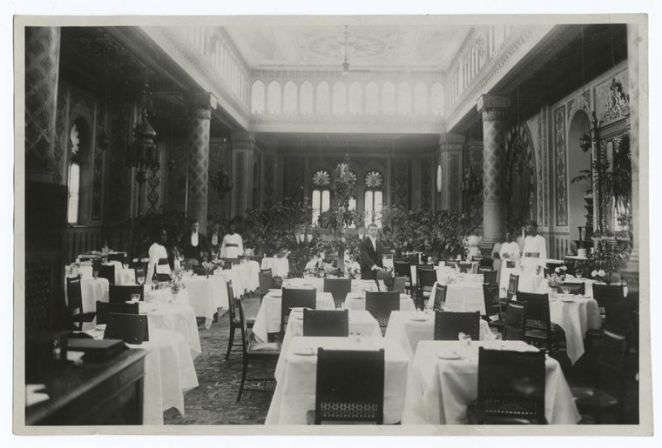
The Heliopolis architectural style, responsible for many wonderful original buildings in Heliopolis, was exceptionally expressed in the Heliopolis Palace Hotel’s exterior and interior design. The hotel had 400 rooms, including 55 private apartments. Beyond the Moorish Revival reception hall two public rooms were lavishly decorated. Beyond those was the Central Hall, the primary public dining space with a classic symmetrical and elegant beauty.
Heliopolis_Diningroom
Heliopolis_Palace_Hotel_1

Description

The Central Hall’s dome, awe inspiring to guests, measured 55 metres (180 ft) from floor to ceiling. The 589 square metres (6,340 sq ft) hall’s architectural interior was designed by Alexander Marcel of the French Institute, and decorated by Georges-Louis Claude. Twenty-two Italian marble columns circled the parquet floor up to the elaborate ceilings. The hall was carpeted with fine Persian carpets and had large mirrored wall panels and a substantial marble fireplace. To one side of the Central Hal was the Grillroom seating 150 guests, and to the other was the billiards hall, with two full-sized British Thurston billiard tables and a ‘priceless’ French one. The private banquet halls were quite large and elaborate.

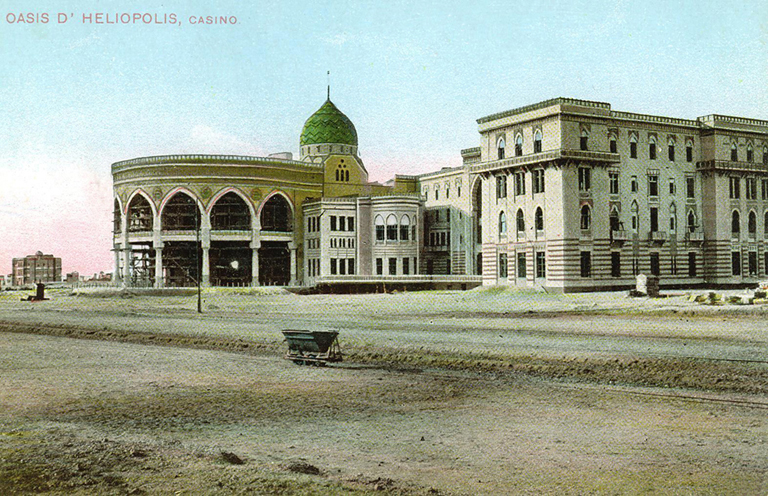
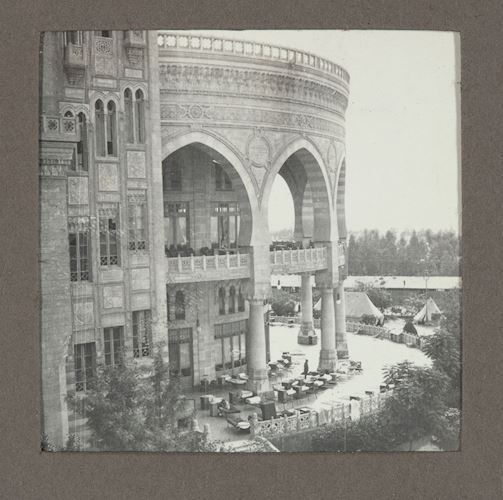
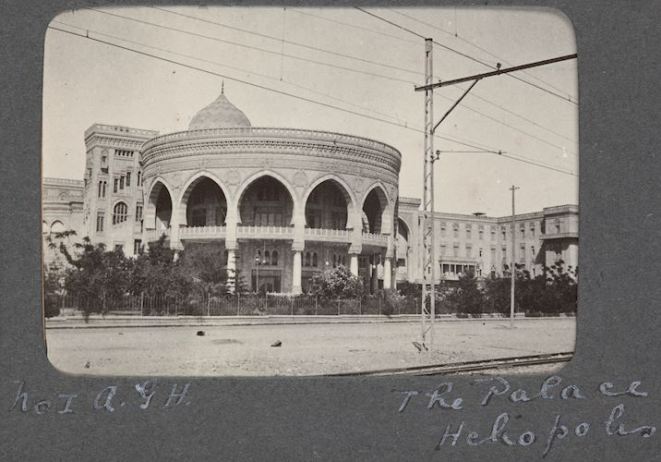
One of the main features of the original design is a half-round building feature in the middle of the rear elevation on the same axis as the entrance portal and the dome. It once functioned as a golden age banquet hall but was originally intended to be a casino to entertain the citizens of the remote Heliopolis “oasis.” 

The Interior

Photos of this banquet hall’s interior are rare. The mahogany furniture was ordered from Maple’s of London. Damascus-made ‘East Orient style’ lamps, lanterns, and chandeliers hung throughout, suspended like stalactite pendants. The upper gallery contained oak-paneled reading and card rooms furnished by Krieger of Paris. The basement and staff areas were so large that a narrow gauge railway was installed running the length of the hotel, passing by offices, kitchens, pantries, refrigerators, storerooms and the staff mess. Notable is the replacement of the traditional original parquet with marble in an arabesque pattern. 


Echoes of the War: A Base Hospital

HeliopolisHotel3
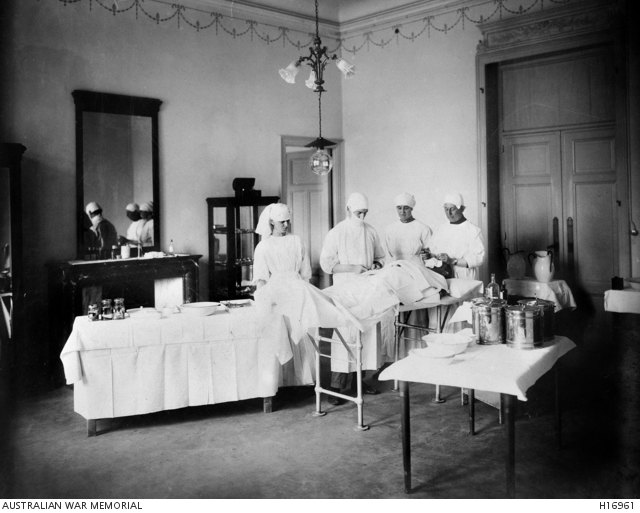
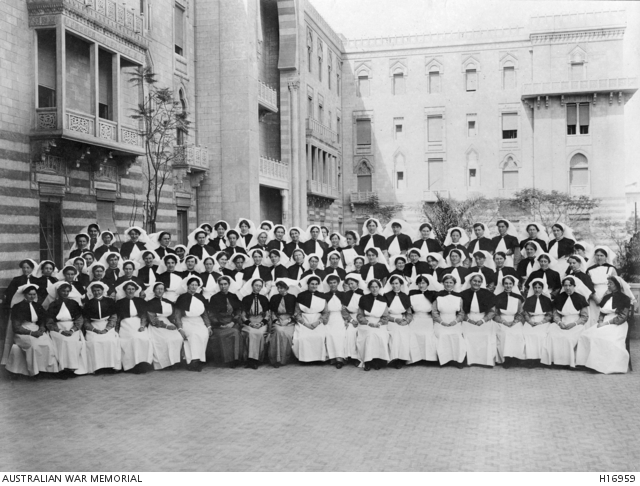
The First Australian General Hospital is installed in the magnificent premises of the Heliopolis Palace Hotel. The building is said to be the most gorgeous hotel building in the whole world, but to day it is filled with the manifold activities of a great general hospital. The figures themselves are large, accommodation for 1,000 sick, but when you pass along corridor after corridor, every door opening on the neat white beds in every room, when you find the grand dining-hall converted into a great convalescent ward with 100 beds, then you begin to understand something of this great institution, filled alas, to-day with the flotsam of youth being prepared for war. For there are no wounded in our 600 sick, only the toll being paid to pneumonia, rheumatism, influenza, and the obscure diseases of this Eastern land. No, it is not a hotel to-day, for grey-robed nursing sisters from Australia move quietly around, cheerfully doing heroic service, and khaki-clad orderlies carrying stretchers or filling their multitudinous duties, pass along the halls and passages. Truly motors constantly come and go, at the front entrance, but they are painted white or grey with the big red cross on sides and top, and their passengers more frequently than not are carried up the marble steps into the spacious entrance hall. And sometimes, alas, the slow march of troops is heard, and the tramp of horses’ feet, the grinding of the wheels of the gun-carriage, for a party of men have come to take away, and pay last honours to the comrade who has died. Within these walls great fights have been, are being fought, medical skill and attention beyond all praise, nursing that fails not, day or night, against the disease that would destroy. Great victories have been won. A haggard man will tell you that he has lost a month of memory. A few months will fill again the wasted cheeks, and build again the muscular limbs, but that lost month of his was spent by nurses and medical officer in an apparently hopeless war against pneumonia and typhoid combined. Again and again defeat seemed inevitable, but the Australian nurses nursed to the last, and victory was snatched, out of apparent defeat. Peace hath victories more wonderful than war. But there are sad things here — too sad for words. Let all who in the Homeland are mourning their dead lying in Egyptian graves know this — that nothing can surpass the tenderness and care with which our Australian women ease the last moments of our boys who die here.
1915 ‘Echoes of the War.’, Spectator and Methodist Chronicle (Melbourne, Vic. : 1914 – 1918), 18 June, p. 882, viewed 13 September, 2014, http://nla.gov.au/nla.news-article154169500
HeliopolisHotel2
The unit left Australia as a General Hospital of 520 beds. In Egypt, during 1916, the establishment was increased to 750 beds and later, in France, in 1916, it was increased to 1040 beds.
The staff and equipment embarked on board the S. S. “Kyarra” along with four other Medical Units of the A. I. F. viz : N° 2 Australian General Hospital, N°s 1 & 2 Aust. Stationary Hospitals and N° 1 Australian Casualty Clearing Station, and sailed for Egypt on 2ist November 1914.
HeliopolisHotel4
Arriving in Egypt on January 14th 1915, the 1st A. G. H. wns accomodated in a building and tents at Heliopolis, a suburb of Cairo. The building was very large and palatial, and is well known as the Heliopolis Palace Hotel. On January 24th 1915 the Hospital was opened for the reception of patients. The patients received consisted of all ranks of the A.I.F., and all classes of cases were treated. After a short period, and owing to circumstances, the hospital took over other additional premises for the treatment of different classes of cases. Amongst such were Aerodrome; The Luna Park; The Atelier; The Sporting Club buildings and grounds at Heliopolis, and The Artillery Barracks at Abbassia Depots, and they were attached to and within the command of the 1st A. G. H. Subsequently, however, all of these Auxiliaries, with the exception of the Aerodrome which was closed in April 1915, were made into separate A. A. M. C., A. I. F. units, each with its own personnel and equipment. They became respectively the N° 1, N° 2, N° 3 and N° 4. Australian Auxiliary Hospitals in Egypt, each of which has a history of its own.
HeliopolisHotel1
The 1st A.G.H. had a most useful career from fourteen to fifteen months in the land of the Pharoahs, having served there from January 1915 to March 1916. During that period the hospital attended to its full share of patients from A.I.F. troops serving in Egypt, also its share of. Australian sick and wounded soldiers who had served in the Gallipoli Expedition in 1915.
In March 1916, following upon the decision that the A.I.F. should serve in France, the various A.A.M.C. units were ordered to close and pack up, their patients being transferred to the Auxiliary and other Hospitals.
The 1st A.G.H., after a hurried departure from Heliopolis, with personnel and equipment for an establishment of 750 beds, embarked at Alexandria on 29th march 1916 upon H.M. Hospital Ship “Salta”. This vessel has since been sunk by enemy action.
Arriving at Marseilles on April 5th the unit disembarked, and after a few days waiting for orders, proceeded by rail and arrived at Rouen on April 13th 1916; and the hospital was opened for the reception of patients on April 29th 1916. The 1st A.G. H. has thus been receiving patients in France for considerably over two years. The patients received have been from all ranks (except officers) of the British Armies in France viz : English, Irish, Scotch. Welsh, South African, Canadian, New Zealand, and our own Australian soldiers, etc. No distinction are made. Recently some U.S.A. soldiers of the American Expeditionary Force have also been received. All the patients are treated equally conscientiously and well, and it is a privilege, an honour and a pleasure to be able to do anything to help them in the great cause in which we are all engaged.
Following the cessation of hostilities on Nov. 11, the hospital ceased to receive patients in France on Nov. 30 1918 preparatory to its transfer to reopen at Sutton Veney near Warminster, England.
The 1st A. G. H. is now in the fifth year of its Active Service and there are very few of the original members amongst its personnel at present. Many changes have taken place owing to the original members and many of their successors having been transferred to other A. A. M. C. units. Several have gone home. Some have been invalided to Australia, and some have “Gone west”.
J. A. D.
The Jackass, Christmas 1918

Recent History


The Heliopolis Palace Hotel is today called the Ittihadiya Presidential Palace. 
In 1958 it was purchased from its original owners by the state which who considered converting it into a municipality of Cairo administration building. The plans fell through as the political leadership under President Gamal Abdel-Nasser preferred a more fitting location on the banks of the Nile in front of the Egyptian Museum. 

In 1972 a new function was assigned to the Heliopolis Palace, becoming the headquarters of the Arab United Republic which united Egypt, Syria and Libya. And hence the name Ittihadiya (Arabic translation for Union) and Uruba Palace (Arabic translation for Arabism). 


Ever since, Ittihadiya has been the office of all the presidents of Egypt, a function that transformed the Heliopolis Palace into a presidential palace.